Getting to know the species
Marginated tortoise
Testudo marginata
Testudo marginata: identity, origin and responsibility. An introductory profile for understanding the species without oversimplifying its needs.

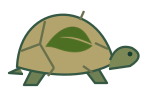
Generated editorial illustration: not suitable for species identification, sex determination or diagnosis.
Testudo marginata is a Mediterranean tortoise distinct from Hermann’s tortoise. The IUCN SSC TFTSG monograph describes the species and its variation: it should not be identified by colour or a stylised outline alone.
Origin and presence in Italy
The IUCN Italy profile gives its origin as Greece and Albania, with ancient introductions to Sardinia. Presence in Italy and native origin are not synonymous: an animal encountered outside these contexts requires assessment, not an improvised release.
A familiar feature, not isolated proof
The expanded rear edge of the carapace is characteristic of adults. Age and variation still require an overall comparison. The illustration on this page is explicitly editorial and is not an identification plate.
Learn before taking one in
Do not choose a marginated tortoise because it looks like a larger Hermann’s. Space, origin, documentation and individual care must be assessed before arrival. Avoid housing animals together simply because they look similar.
Science notebook · Among stone, scrub and light
A closer look at Testudo marginata
The marginated tortoise is a large Mediterranean species, but its history differs from Hermann’s. Its characteristic rear shell edge, Balkan origin and introduced Sardinian populations tell the story of a species with marked local variation.
Adult carapace
Up to approximately 40 cm
The monograph also documents an exceptional individual measuring 47.5 cm: this is not a usual size. [1]
Length refers to the carapace, excluding head and tail. Averages, maxima and records are distinguished: they are not growth targets or diagnoses for an individual animal.
Species atlas
Where it lives in the world
Greece · Albania · Sardinia


- Indicative broad native range
- Selected historical introductions
Native range in Greece and southern Albania. Its presence in Sardinia, particularly the north-east, results from historical introductions: this is distinguished in ochre, rather than included in the native range. [1]
Editorial cartographic overview: discontinuous distribution and generalised boundaries, not an official map or a map of specific sites. Base map: Natural Earth, public domain. No locations of individual animals.
Closer to home · Italy and Sardinia
The marginated tortoise and Sardinia: a shell tells a story
Historical introduction to Sardinia
An Italian presence, not an Italian origin
The species originates in the Greek-Albanian region. ISPRA reports populations in Sardinia, Tuscany and Lazio attributable to ancient introductions. On our maps, ochre distinguishes this context from the green native range: living somewhere for a long time does not mean originating there. ISPRA The Reptile Database
The bell-shaped carapace
In adults, the shell tends to be elongated, with a widened, flared rear edge; the plastron has dark triangular markings. The regional profile also mentions Mediterranean scrub and woodland habitats. Juveniles have a less distinctive outline: comparisons must take age into account. SardegnaForeste
‘Sardinian marginated tortoise’ is not a fourth species
The name Testudo marginata sarda appears in the Reptile Database’s synonymy, not as a distinct species. Testudo weissingeri is also assigned to Testudo marginata in the reference consulted. To avoid duplication, we keep a single profile and explain origin and variation within it. The Reptile Database
If you encounter a wild tortoise, observe it without picking it up, taking it home or moving it to another habitat. If it is injured or in danger, contact the Forestry Corps. Do not publish coordinates or precise sighting locations: learning about animals must not make them more vulnerable to collection. Sardinian Forestry Corps
Regional and taxonomic sources consulted on 11 September 2026. The profile’s images illustrate the species; they do not certify that the individual comes from Sardinia.
Compare Sardinia’s three species →Habitat: not only lowlands
It uses scrub, grasslands and rocky slopes, from dry to subhumid Mediterranean climates. Occurrences are known up to around 1,600 metres in Greece and 600 in Sardinia. The landscape offers different exposures and shelters within a few steps. [1]
A gatherer of plants
It is a generalist herbivore, using many plant species, including introduced plants such as some Opuntia. ‘Generalist’ describes a variety of natural resources, not an ability to thrive on any food scraps. [1]
From egg-laying to juvenile
The monograph often describes 4–7 eggs per clutch, with wider variation between populations. Sardinian data give an incubation period of around 2–3 months. Figures like these must be read alongside the study location and conditions, rather than automatically applied to every individual. [1]
Interpreting uneven growth
Diet, humidity and temperature all contribute to carapace development: attributing every deformity solely to protein intake is an oversimplification. [4]
Sources and further reading
Research and synthesis: Tartarughe di Terra editorial team · Fondazione I Custodi della Terra ETS. Sources consulted on . Scientific monographs, studies and profiles from zoological institutions are listed here so you can consult the original information.
- Escoriza D., Tzoras E., Bringsøe H. (2023). Testudo marginata — Marginated Tortoise. Chelonian Research Monographs 5(17), 122.1–25. DOI: 10.3854/crm.5.122.marginata.v1.2023.
- Centro de Conservación Zoo Córdoba (2026). Tortuga marginada. Institutional zoological profile; captive-care estimates.
- Human Ageing Genomic Resources (build 15, 2023). AnAge: Testudo marginata. Comparative life-history database.
- Nijboer J., Fens A.; reviewed by Brandão J. (2025 revision). Nutrition in Tortoises. Merck Veterinary Manual.
