Guide
Testudo hermanni: a complete guide to care and protection
Caring responsibly for Testudo hermanni: origin, documents, enclosure, diet, water, seasons, health and species protection.
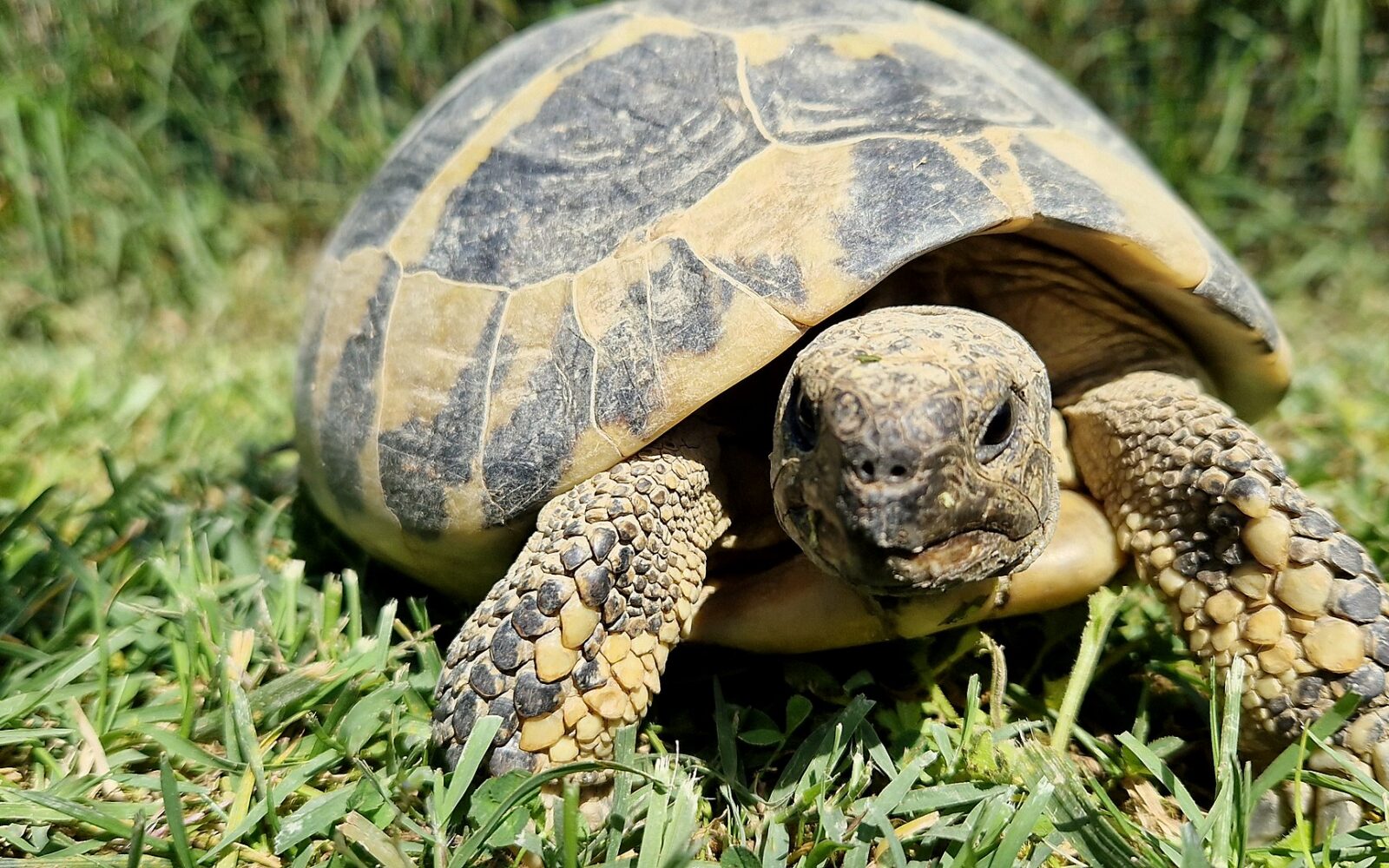
The short answer: caring well for Testudo hermanni begins with respecting its identity, origin and natural rhythms. It requires consistent documentation, a safe and varied outdoor habitat, a varied plant-based diet, accessible water, regular observation and help from a vet experienced in reptiles when something changes.
This is an introductory guide. It does not replace a veterinary examination or a check of an individual certificate with the relevant CITES service. Needs vary with age, health, origin, subspecies, climate and the animal’s history.
Getting to know Testudo hermanni
Hermann’s tortoise is a Mediterranean land tortoise. Italy has native wild populations of great conservation value, as well as legally kept animals born in controlled conditions: these are two different situations. An animal encountered in the wild does not become a pet and must not be taken.
It is long-lived, ectothermic and strongly influenced by the seasons. Sun, shade, temperature, humidity, soil and access to shelter affect activity, feeding and rest. That is why simply “feeding it” is not enough: its habitat must allow the animal to make choices.
Before welcoming one: five checks
- Lawful, traceable origin: do not accept animals without the documents required for the specific case.
- A long-term commitment: consider moving home, future carers, veterinary costs and care while you are away.
- Suitable outdoor space: a container or small terrarium is not a permanent solution for an adult Mediterranean species.
- A veterinary contact: find a professional with documented reptile experience before you need one.
- No unplanned breeding: births and transfers bring care and documentation responsibilities.
Habitat and enclosure: offering choices
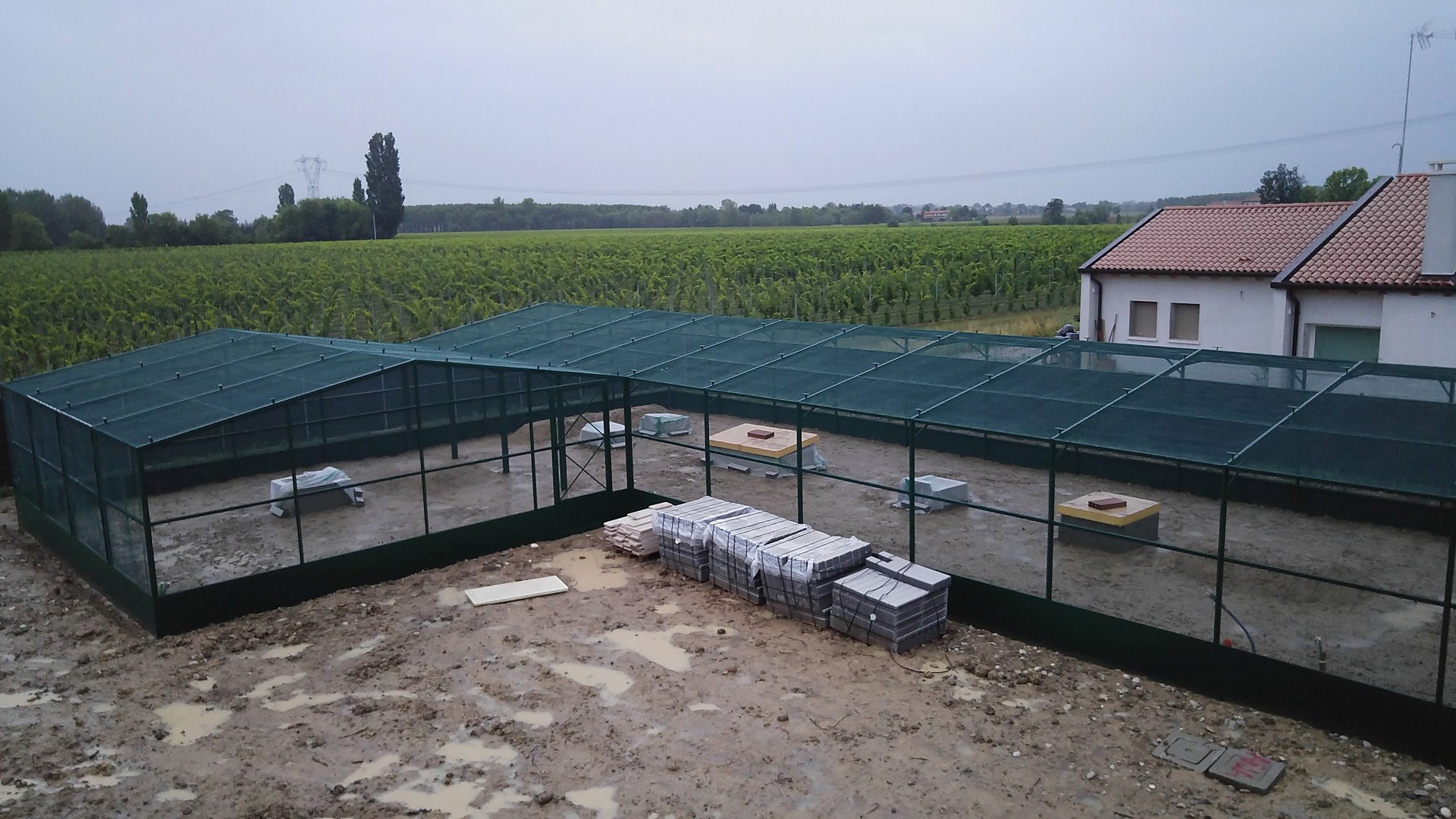
An enclosure should prevent escapes, intrusions and digging beneath the perimeter without becoming a barren space. A good habitat includes sunny and shaded areas, natural well-drained ground, non-toxic vegetation, dry shelters and damper microhabitats. Uniform surfaces prevent effective thermoregulation and limit natural behaviour.
Regularly check mesh, edges, gates, standing water, plants, burrows and possible predators. Hatchlings and juveniles need greater overhead protection and microhabitats that prevent dehydration and overheating.
Read more: habitat and a safe enclosure →
Food and water
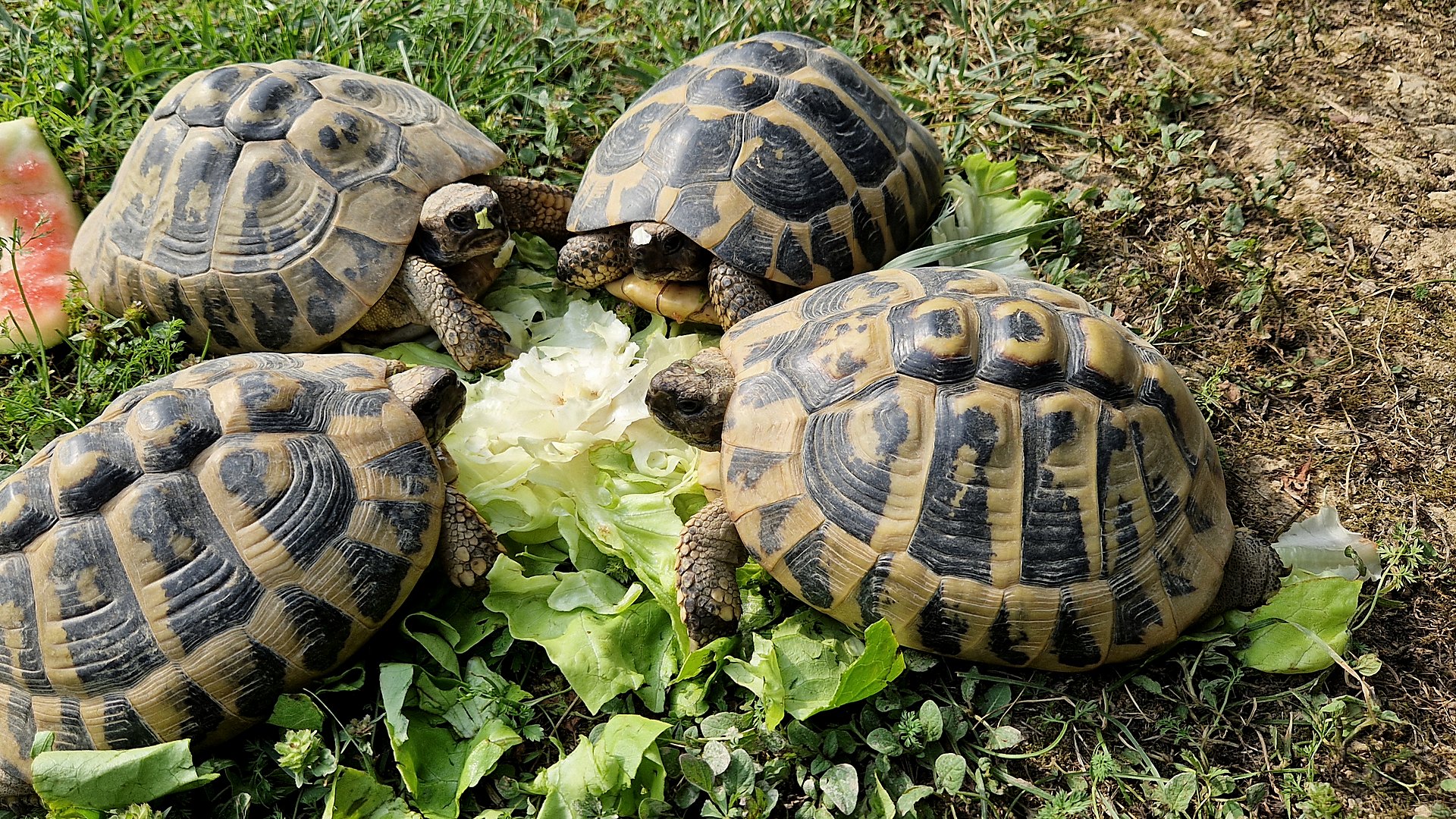
The diet should be plant-based, varied and appropriate for a Mediterranean herbivore: correctly identified wild plants, suitable leaves and flowers, offered according to seasonal availability. Variety matters more than finding one “perfect” food.
- Avoid processed foods, table scraps and dog or cat food.
- Do not make fruit and very watery vegetables the daily staple.
- Do not use supplements as an automatic remedy for an unsuitable diet or environment.
- Learn to identify plants with certainty before offering them.
Clean water must always be available in a shallow, stable, easily accessible bowl. Change it frequently, even when it seems to be ignored.
Read more: feeding Testudo hermanni →
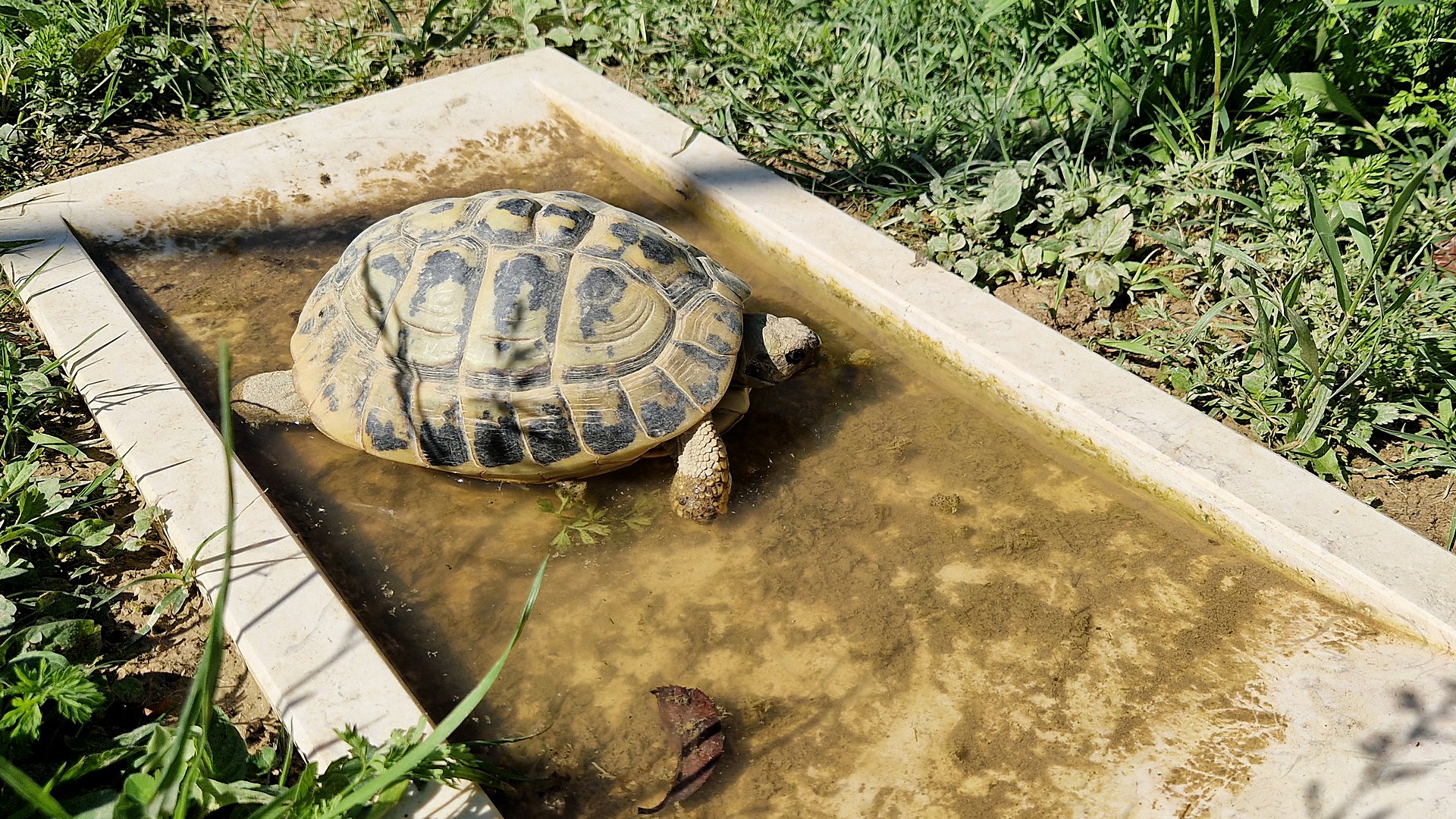
Seasons, hibernation and waking up
Seasonal rhythms are not an on/off switch. Preparation for dormancy and the return to activity depend on environmental conditions, body condition and health. An animal that is ill, underweight or has not been properly assessed should not be allowed to hibernate.
Before winter, record weight and observations, check the overwintering site and agree monitoring criteria with your vet. During dormancy, avoid unnecessary handling, but do not ignore flooding, abnormal temperatures, repeated waking or suspicious weight loss. On waking, check activity, hydration, breathing and the return to feeding.
Read more: hibernation and waking up →
Written description of the video
An adult tortoise moves slowly through an enclosure with natural vegetation. The view shows how grass, shelters and varied areas give the animal choices.
Daily observation helps prevent problems
Knowing an individual animal’s usual appearance and behaviour helps you notice changes early. A simple record of periodic weights, diet, activity, egg laying, hibernation and health events is more useful than isolated measurements without context.
When to contact a vet promptly
- injury, a bite, a fall, a fracture or bleeding;
- noisy or open-mouth breathing, mucus or bubbles from the nose or mouth;
- eyes that remain closed, swollen or sunken;
- abnormal immobility, weakness, loss of balance or rapid weight loss;
- failure to resume activity after hibernation or persistent refusal of food during the active season;
- prolapse, difficulty laying eggs or repeated straining.
If there is an injury or difficulty breathing, do not wait for an online reply. Keep the animal safe, limit handling and contact a vet experienced in reptiles immediately.
Read more: prevention and warning signs →
Living together, sex and breeding
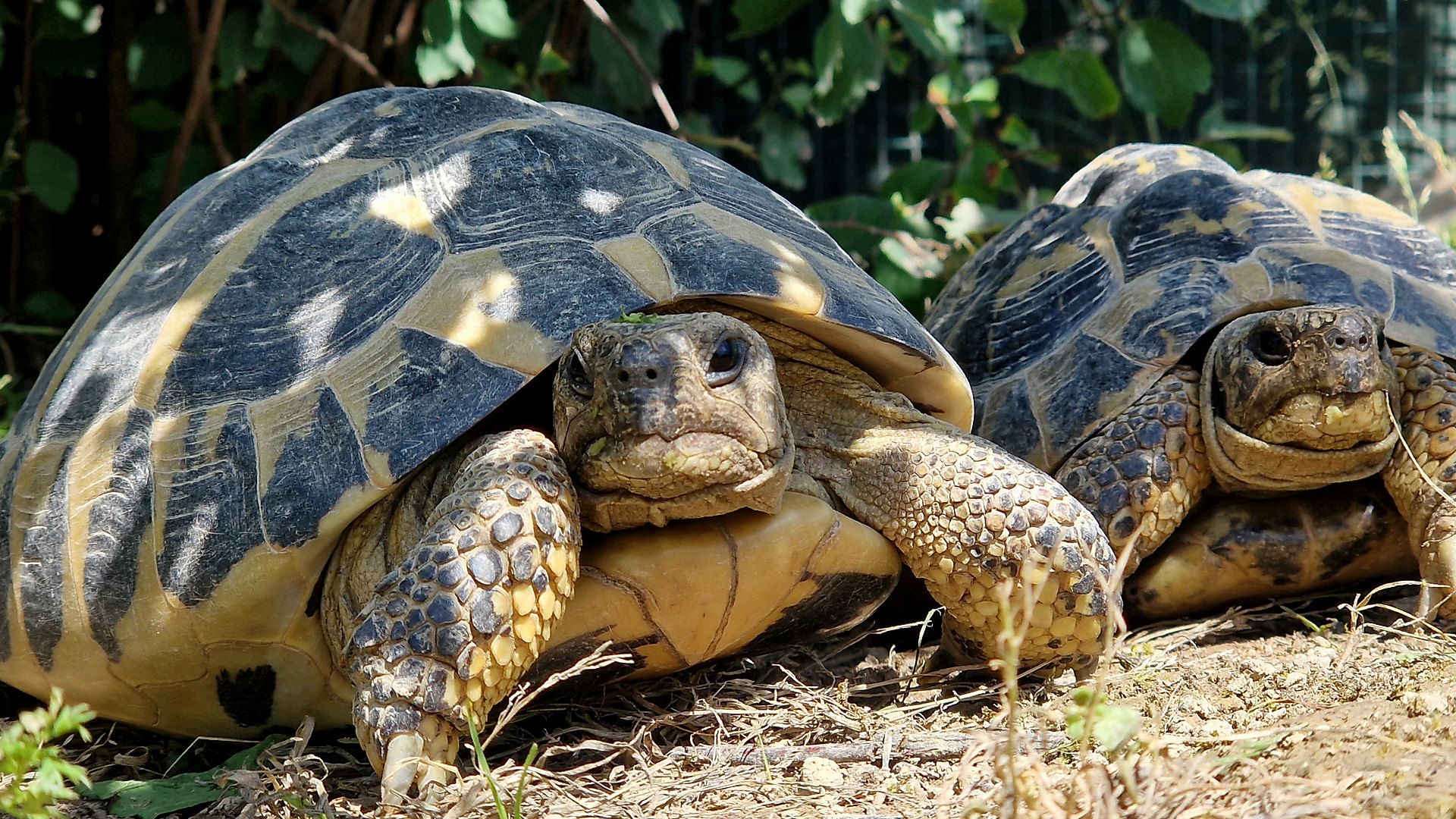
Tortoises do not need to live in groups to thrive. Insufficient space, several males, persistent courtship or differences in size can cause stress and injuries. You must be able to separate individuals immediately and provide multiple shelters, feeding areas and water points.
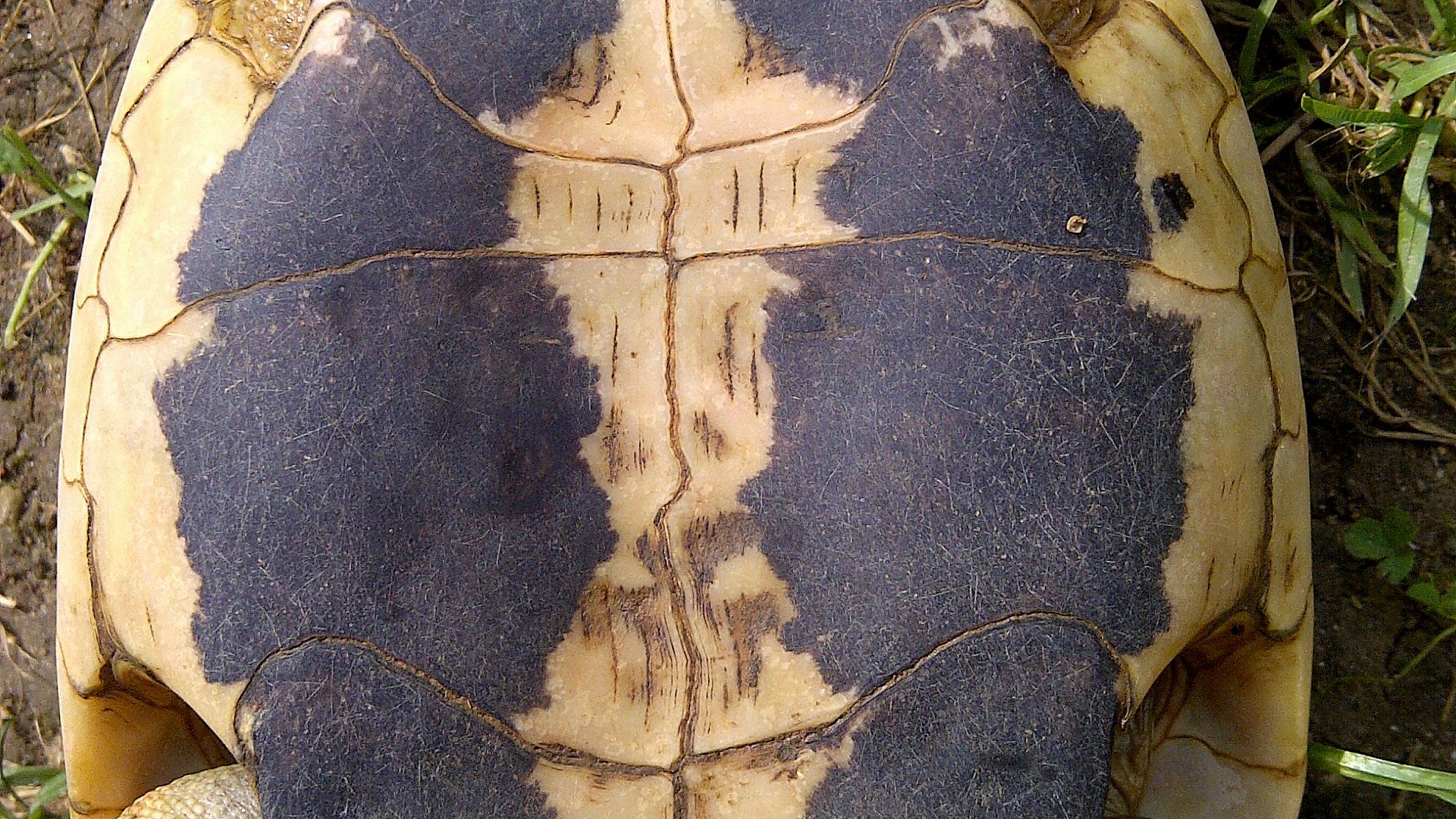
Sex is assessed by comparing several features, particularly in mature individuals; one detail or an unclear photograph is not enough. See the visual male-or-female guide →
Before encouraging breeding, consider future space, genetic and geographical compatibility, the parents’ health and documentation obligations for hatchlings. The care plan must come before the birth.
Documents, CITES and protection
Testudo hermanni is listed in CITES Appendix II and Annex A of the European Union’s Council Regulation (EC) No 338/97. Within the EU, this entails particularly strict rules on acquisition, keeping for commercial activities, movement, breeding and transfer.
A document must be read as a whole: the animal’s identification, origin, marking, named holder, restrictions and purposes must be consistent with the intended action. There is no answer that applies to every certificate. For sales, transfers, births, deaths, losses, marking or relocation, always check the current procedure with the relevant local CITES service before acting.
Do not buy or accept a tortoise expecting to “sort out the documents later”.
Read more: the law and CITES →
The responsible Guardian’s checklist
- I keep documents and photographic records organised.
- I check the animals, water, enclosure and weather every day.
- I provide space, sun, shade, soil, shelters and a variety of suitable plants.
- I record changes rather than relying on memory alone.
- I do not mix new animals with others without quarantine and a health assessment.
- I do not take wild tortoises or release animals kept in human care.
- I ask for help before uncertainty becomes an emergency.
Frequently asked questions
Can Testudo hermanni live indoors permanently?
Permanent indoor housing does not adequately reproduce the complexity of a Mediterranean outdoor habitat. Any temporary indoor accommodation should meet a specific need and follow an environmental or veterinary plan.
Does it need to live with another tortoise?
No. Living together is not a welfare requirement and may lead to competition, persistent courtship and injuries. Any group must be capable of being separated.
If I find a tortoise, can I take it home?
No: first you must distinguish a wild animal from one kept in human care and contact the relevant authority. Photograph it without sharing the precise location, and do not keep it on your own initiative.
How can I tell whether it is male or female?
Several features of the plastron, tail and rear region are compared, taking age and size into account. Assessment may be uncertain in young animals.
What is the first sign that something is wrong?
Often it is a change from what is normal for the individual: activity, posture, breathing, eyes, appetite or weight. Do not wait for a dramatic sign when a change persists.
Being a Guardian means turning daily attention into protection. If you found this guide useful, you can support the Foundation’s free educational work or send us a well-documented question.
