
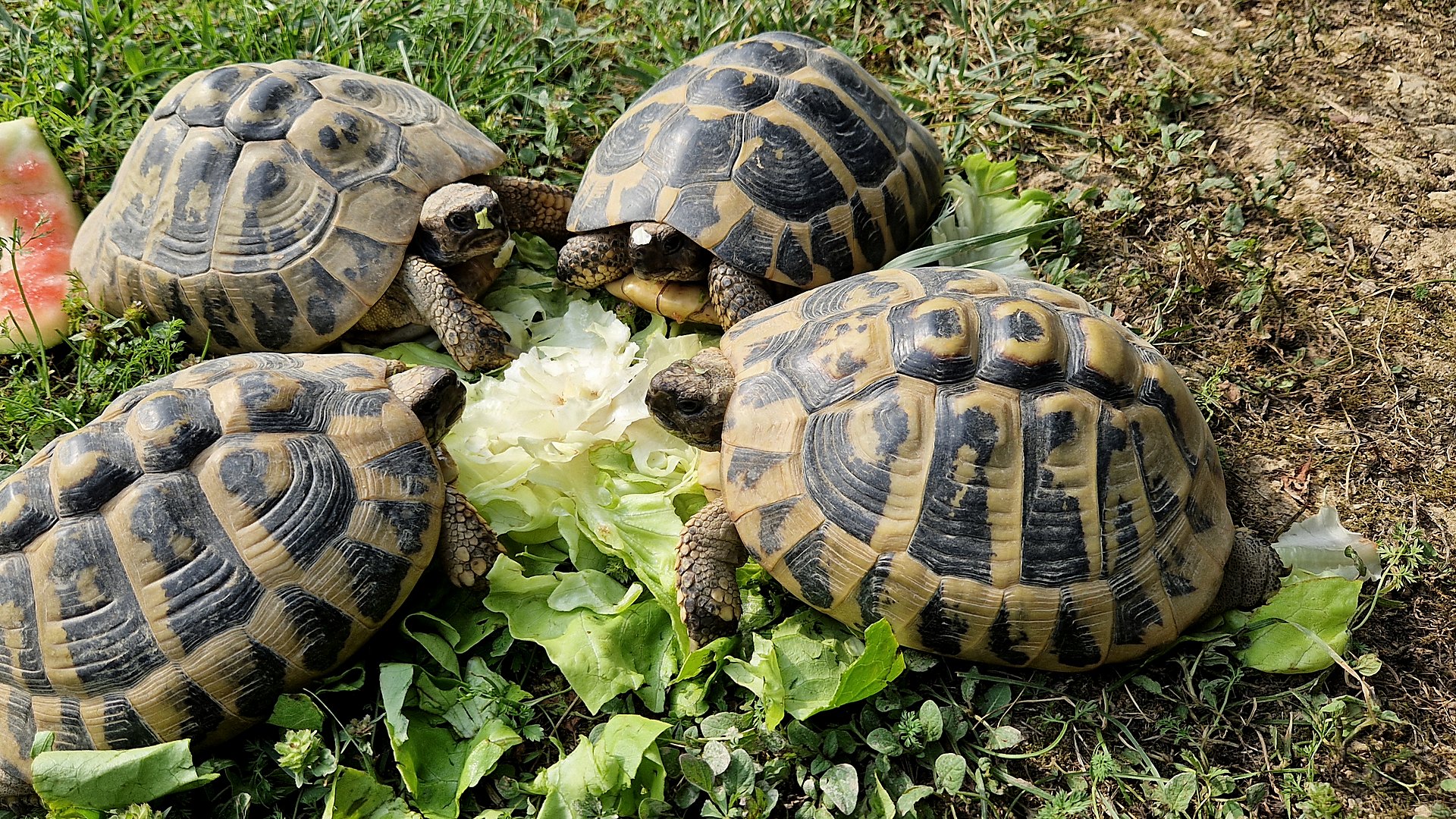
An archive photograph, not a diet plan: one meal does not represent the overall diet.
The diet of Testudo hermanni should meet the needs of a Mediterranean herbivore: varied, rich in suitable plant foods and accompanied by accessible water. No single food can make up for an unsuitable environment. This page offers guidance, not a clinical diet prescription.
Variety is a habit, not an endless list
Ask what is actually eaten over several weeks, not just what was offered today. Offering the same plant again and again because it is a favourite narrows the diet. Likewise, a photograph of one meal cannot tell you how the animal is cared for overall.
Not all tortoise species have the same needs. Do not apply advice intended for aquatic turtles or tropical forest tortoises to Testudo hermanni. Age, environmental conditions and individual health should be considered with a vet experienced in reptiles.
Learn to identify plants before collecting them
“Wild plant” does not automatically mean safe food. Do not offer a plant unless you are certain of its identity and suitability for the species. A photograph or an app can suggest an identification, but neither is a guarantee.
- Document the whole plant and its surroundings, not just one leaf.
- Avoid plants from roadsides, treated areas or places whose management you know nothing about.
- Do not rely solely on ambiguous local names to identify a plant.
- If in doubt, leave the plant out and seek a knowledgeable identification.
Water belongs on the daily checklist too
Provide clean water in a shallow, stable, accessible container suited to the animal’s size. Check that getting in and out is easy and that the container cannot become an obstacle or a trap. Having water in the enclosure is no reason to force baths or handle the animal unnecessarily.
Four shortcuts that do not help
- Our table scraps: they are not a diet for an herbivore.
- Lettuce alone: a repetitive choice is not a complete feeding plan.
- Guessing supplement doses: seek advice on whether they are needed and how to use them, rather than treating them as universal remedies.
- Forcing an animal to eat: loss of appetite needs context and, when abnormal, veterinary assessment.
For a useful discussion, keep a record of foods offered and eaten, changes in behaviour and changes to the environment. Do not include animal identification details or documents in a public request to the editorial team.
