Getting to know the species
Horsfield’s tortoise
Testudo horsfieldii
Testudo horsfieldii: identity, origin and responsibility. An introductory profile for understanding the species without oversimplifying its needs.

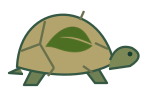
Generated editorial illustration: not suitable for species identification, sex determination or diagnosis.
Horsfield’s tortoise, Testudo horsfieldii, comes from Central Asia. Reference works also use the name Agrionemys horsfieldii. It is not a Mediterranean tortoise and should not be treated as a variant of Hermann’s tortoise.
Its place of origin changes the questions
The continental environments of Central Asia help explain why care copied from other species may be unsuitable. This does not mean simply making an enclosure ‘very dry’: a real habitat consists of microhabitats, shelters and seasonal changes.
Digging, space and observation
When planning care, consider digging and escape risks and assess the perimeter carefully. Safety is not achieved by turning the enclosure into a bare surface. Before setting it up, compare the species’ needs with the conditions you can genuinely provide.
A history to piece together
Clarify origin and documentation rather than inferring them from appearance. Seek a species-specific assessment of seasonal rhythms, health and housing, especially for a newly arrived animal whose history is largely unknown.
Understanding the image’s limitations
The generated illustration accompanies the story. Do not use it to distinguish similar species or determine an individual’s sex: visual resemblance is not a substitute for verification.
Science notebook · A spring not to be missed
A closer look at Testudo horsfieldii
Horsfield’s tortoise concentrates much of its activity into favourable windows. Its biology is better understood by imagining burrowable soil, seasonal vegetation and strong climatic contrasts, rather than an animal constantly moving across a green lawn.
Adult carapace
Approximately 15–25 cm
Mill Mountain Zoo gives approximately 15–20 cm for males and 20–25 cm for females. [1]
Body mass
Approximately 680 g in the zoo profile
Converted from 1.5 pounds: a general reference, not a universal maximum or a target weight. [1]
Longevity
50–60 years
Indicative range from Mill Mountain Zoo; an individual’s survival is not guaranteed. [1]
Length refers to the carapace, excluding head and tail. Averages, maxima and records are distinguished: they are not growth targets or diagnoses for an individual animal.
Species atlas
Where it lives in the world
Central Asia · Iran · Afghanistan


- Indicative broad native range
Central Asia: parts of Iran, Afghanistan and Pakistan, the Central Asian republics and north-western China. The name ‘Russian’ does not define its range. High mountains and many intervening environments are unoccupied: this map provides regional orientation. [2]
Editorial cartographic overview: discontinuous distribution and generalised boundaries, not an official map or a map of specific sites. Base map: Natural Earth, public domain. No locations of individual animals.
Shelter is part of the habitat
The foraging study describes a highly concentrated annual activity period: around three months in the system observed. Even then, the animals spent much of their time inactive. Underground shelter and choosing favourable hours are therefore central to understanding their behaviour. [3]
Not a miniature lawnmower
In the observations by Lagarde and colleagues, tortoises selected broad-leaved plants and avoided grasses. They also ate plants problematic for mammals: this is an ecological finding, not a list of foods to reproduce at home. Diet depends on the resources and season of the population studied. [3]
Maturity and life stages
Mill Mountain Zoo places sexual maturity at around ten years and the breeding season between March and June. These are general references: biological maturity, seasonal resources and simple weight gain are not the same thing. [1]
A pause cannot be interpreted from a chart
Long periods of natural inactivity do not make every motionless animal normal. To discuss a change with your vet, note when it began, the environmental context, appetite and previous measurements. This profile describes a species; it does not diagnose your animal.
Sources and further reading
Research and synthesis: Tartarughe di Terra editorial team · Fondazione I Custodi della Terra ETS. Sources consulted on . Scientific monographs, studies and profiles from zoological institutions are listed here so you can consult the original information.
- Mill Mountain Zoo (n.d.). Russian tortoise. Institutional zoological profile.
- The Reptile Database (n.d.). Testudo horsfieldii. Taxonomy and geographical distribution.
- Lagarde F., Bonnet X., Corbin J., Henen B., Nagy K., Mardonov B., Naulleau G. (2003). Foraging behaviour and diet of an ectothermic herbivore: Testudo horsfieldi. Ecography 26(2), 236–242. DOI: 10.1034/j.1600-0587.2003.03365.x.
